
Clinical trials exist to answer one fundamental question: does a new treatment, drug, or medical approach work better than what we have now, and is it safe? Every medication your doctor prescribes, every therapeutic device in a hospital, every evidence-based protocol that guides your care has passed through rigorous clinical testing designed to protect patients while advancing medicine. These studies systematically evaluate whether experimental interventions prevent disease, diagnose conditions more accurately, treat illness more effectively, or improve quality of life with fewer side effects than current standards.
For patients living with venous thromboembolism, or VTE (blood clots in veins), clinical trials have transformed outcomes over the past two decades. The anticoagulants many people rely on today, the risk assessment tools doctors use to personalize treatment duration, and the compression therapies that prevent post-thrombotic syndrome all emerged from carefully designed research studies. Without clinical trials, medicine would stagnate. We would continue using treatments from decades past without knowing whether newer options could reduce bleeding risk, simplify dosing, or prevent recurrent clots more effectively.
Beyond testing new drugs, clinical trials serve critical secondary purposes. They identify which patients benefit most from specific treatments, uncover rare side effects that smaller studies miss, and establish the optimal dose, timing, and duration of therapy. They also provide eligible participants early access to promising treatments before those options reach the broader market.
Understanding how trials work, who can participate, and where to find trustworthy information empowers you to make informed decisions about contributing to medical progress while potentially benefiting your own health.
The Core Purposes of Clinical Trials

At their core, clinical trials answer one fundamental question: does this medical intervention work safely for real patients? Every medication you take, every surgical technique your doctor uses, every diagnostic test that guides your treatment reached you because hundreds or thousands of volunteers participated in rigorous studies testing whether the approach actually helps people without causing unacceptable harm. Clinical trials transform promising laboratory findings into proven therapies by subjecting them to systematic evaluation in human populations under controlled conditions.
The first essential purpose is testing safety. Researchers must determine what side effects occur, how frequently they happen, and how serious they become at different dose levels. For VTE patients, this means carefully monitoring whether a new anticoagulant causes more bleeding than existing options, whether it interacts dangerously with common medications like antibiotics or heart drugs, and whether certain populations face elevated risks. Early-phase trials start with small numbers of healthy volunteers or patients, gradually expanding only after demonstrating acceptable safety profiles.
Equally critical is measuring effectiveness. A treatment must actually improve patient outcomes compared to giving nothing at all or compared to current standard care. VTE trials measure whether new anticoagulants prevent recurrent blood clots as well as or better than warfarin, how quickly they dissolve existing clots, whether they reduce the risk of post-thrombotic syndrome, and ultimately whether they help patients live longer, healthier lives. Effectiveness isn’t just about biological markers; it encompasses quality of life, symptom relief, and functional recovery.
Clinical trials also establish optimal dosing and treatment duration through systematic comparison. Researchers test multiple dose levels to find the sweet spot where benefits maximize while risks minimize. For VTE treatment, this means determining whether patients need three months or six months of anticoagulation after their first clot, whether extended therapy beyond that period provides additional protection, and what dose adjustments suit patients with kidney disease or extreme body weights.
Another vital function is identifying which patient groups benefit most. Not every treatment works equally well for everyone. Trials help researchers discover whether older adults respond differently than younger patients, whether men and women experience different outcomes, whether the treatment works for pregnant women with VTE, and whether cancer patients, who face both higher clot risk and higher bleeding risk, can safely use new anticoagulants. This stratification allows doctors to personalize treatment recommendations rather than applying one-size-fits-all approaches.
Finally, trials uncover unexpected side effects that only become apparent when larger numbers of diverse patients use a treatment over extended periods. A rare complication affecting one in 5,000 patients won’t show up in a 200-person early trial but becomes critically important once millions take the medication. Long-term follow-up studies have revealed, for example, that some anticoagulants carry different risks for gastrointestinal bleeding or interact unexpectedly with specific foods, findings that now shape how doctors prescribe these medications and counsel patients.
How Clinical Trials Move Medicine Forward for VTE Patients
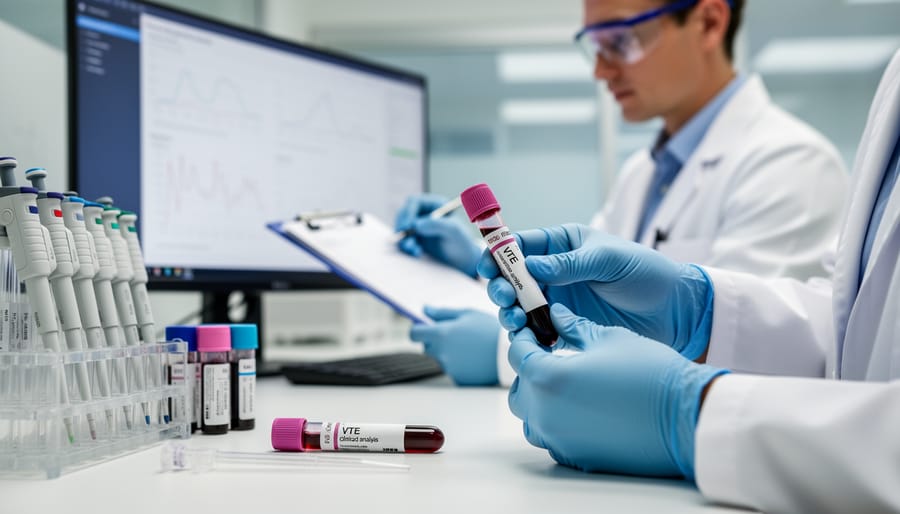
The progression from warfarin to direct oral anticoagulants illustrates clinical trials at work. Warfarin became the standard VTE treatment through decades of research, but its narrow therapeutic window, frequent monitoring requirements, and food-drug interactions created real burdens for patients. Large-scale trials comparing newer anticoagulants to warfarin directly measured bleeding rates, clot recurrence, and quality of life. These studies gave physicians the evidence needed to confidently prescribe DOACs to appropriate patients, fundamentally changing daily management for millions.
Clinical trials also refined how we determine treatment duration. Early research established that stopping anticoagulation too soon increased recurrence risk, but continuing indefinitely raised bleeding concerns. Subsequent trials tested different durations in various patient groups, leading to today’s evidence-based guidelines that balance individual risk factors. A patient with provoked VTE from surgery now typically receives three to six months of treatment, while someone with unprovoked clots and high recurrence risk might continue indefinitely. These distinctions emerged from methodical trial work, not guesswork.
Special populations particularly benefit from targeted research. Cancer patients with VTE faced limited options until trials established that low-molecular-weight heparin reduced recurrence better than warfarin in this group, and more recent studies validated DOAC use in certain cancer types. Pregnant women, who cannot take most oral anticoagulants, gained safer protocols through careful research establishing heparin dosing and timing around delivery. Trials examining prevention strategies led to risk assessment tools that identify surgical patients who need prophylaxis and validated interventions like compression socks for DVT prevention during long flights.
Each advance traces back to patients who participated in studies, contributing data that shaped clinical practice. The anticoagulant you take, the monitoring schedule your doctor follows, and the duration of your treatment all rest on foundations built through clinical trials.
The Four Phases of Clinical Trials Explained
Clinical trials progress through four distinct phases, each designed to answer specific questions about a new treatment. Understanding these phases helps patients recognize where a particular VTE study fits in the research timeline and what to expect from participation.
Phase I trials represent the first tests of a new treatment in humans. These small studies typically involve 20 to 80 healthy volunteers or patients and last several months to a year. Researchers focus on basic safety: determining a safe dosage range, identifying how the body processes the medication, and watching for immediate side effects. For a new VTE anticoagulant, Phase I would establish how quickly the drug reaches therapeutic levels in the bloodstream and how the body eliminates it.
Phase II trials expand to 100 to 300 patients who have the condition being treated. These studies run one to two years and test whether the treatment actually works while continuing safety monitoring. Researchers look for preliminary effectiveness signals and optimal dosing strategies. A Phase II VTE trial might test different doses of a new anticoagulant to determine which prevents clot recurrence most effectively with manageable bleeding risk.
Phase III trials are large-scale studies involving 300 to 3,000 participants across multiple medical centers. These pivotal trials, lasting two to four years, compare the new treatment directly against current standard care. Success here typically leads to regulatory approval. The major trials that brought direct oral anticoagulants (DOACs) to market were Phase III studies demonstrating that medications like rivaroxaban and apixaban worked as well as warfarin for VTE treatment with fewer major bleeding events.
| Phase | Purpose | Participant Count | Duration | VTE Example |
|---|---|---|---|---|
| I | Test safety and dosing in humans | 20-80 | Several months to 1 year | Establish safe anticoagulant dose range |
| II | Evaluate effectiveness and side effects | 100-300 | 1-2 years | Test if new anticoagulant prevents clot recurrence |
| III | Compare to standard treatment | 300-3,000 | 2-4 years | DOAC trials proving effectiveness vs. warfarin |
| IV | Monitor long-term effects in real-world use | Thousands | Ongoing years | Track rare bleeding events in diverse patient groups |
Phase IV trials begin after a treatment receives approval and enters widespread use. These post-marketing studies monitor thousands of patients over years to detect rare side effects that smaller trials might have missed and confirm long-term effectiveness across diverse real-world populations. For VTE medications, Phase IV research has revealed important safety information about bleeding risks in elderly patients, those with kidney disease, and people taking multiple medications simultaneously. This ongoing surveillance ensures that approved treatments remain safe and effective as more patients with varying health profiles use them. Phase IV studies also explore new uses for approved medications, such as testing whether a DOAC approved for treating VTE also prevents clots in patients with specific heart conditions.
Who Can Participate and How to Determine Eligibility
Clinical trial eligibility criteria function as scientific guardrails, ensuring participant safety while producing reliable data that can guide treatment decisions for thousands of future patients. Every study establishes specific inclusion criteria (characteristics you must have) and exclusion criteria (factors that disqualify participation), creating a carefully defined participant group.
For VTE trials, inclusion criteria typically specify the type of blood clot (deep vein thrombosis, pulmonary embolism, or both), how recently it occurred (many studies require diagnosis within the past week to month), and whether it was provoked by a known trigger or unprovoked. Researchers need this precision because different VTE types may respond differently to treatments, and timing matters for comparing outcomes fairly.
Exclusion criteria protect you from potential harm. A trial testing a new anticoagulant might exclude people with active bleeding, severe kidney disease, or those taking medications that interact dangerously with the study drug. Pregnancy, recent surgery, certain cancers, liver problems, and uncontrolled high blood pressure commonly appear as exclusion factors. These restrictions aren’t arbitrary, they reflect genuine safety concerns and ensure the trial can isolate whether the treatment itself causes any effects observed.
Your current medications matter significantly. Some trials exclude anyone already taking anticoagulants, while others specifically recruit patients on existing therapy to test whether switching offers benefits. Always disclose every medication, supplement, and herbal remedy you take.
Being ineligible for one study doesn’t close all doors. VTE research spans dozens of active trials with vastly different criteria. A trial seeking newly diagnosed patients obviously won’t accept someone years past their clot, but studies examining long-term prevention strategies might. Patient registries and observational studies often have broader eligibility than drug trials, offering alternative ways to contribute to VTE research.
What Participation Actually Involves

Participating in a clinical trial follows a structured path designed to protect you while advancing medical knowledge. Here’s what to expect at each stage.
The process begins with screening to confirm you meet the study criteria. You’ll discuss your medical history, current medications, and recent VTE diagnosis with the research coordinator who serves as your primary contact throughout the trial. They’ll explain exactly what participation requires and answer your questions.
Next comes informed consent, a conversation, not just paperwork. The research team explains the trial’s purpose, what treatment you might receive, potential risks and benefits, time commitments, and alternatives to participation. You’ll receive detailed written information to review at home. Consent is ongoing; asking questions weeks later is completely normal and expected.
Baseline testing establishes your starting point. This typically includes blood work, imaging studies, and questionnaires about your symptoms and quality of life. These measurements let researchers track changes during treatment.
Treatment assignment happens through randomization when trials compare multiple approaches. Think of it like a coin flip determining which group you join, researchers can’t choose, and often neither you nor your doctor knows which treatment you’re receiving (called blinding). This prevents bias from influencing results.
Follow-up visits occur at scheduled intervals, perhaps monthly or quarterly depending on the study design. You’ll have blood tests, report any symptoms or side effects, and complete assessments. Between visits, you might keep a medication diary or wear a monitoring device.
Reporting side effects matters enormously. Contact the research coordinator immediately for serious symptoms, but also mention minor concerns at your next visit. Every data point helps researchers understand how treatments work in real-world conditions.
You maintain the right to withdraw anytime, for any reason, without affecting your regular medical care. The team will discuss safe transition plans if you leave mid-study.
After completion, you’ll learn the study results and discuss next treatment steps with your healthcare provider.
Finding Clinical Trials and Getting Support
Start by exploring multiple pathways to locate VTE research opportunities. ClinicalTrials.gov search functions as the most comprehensive database, allowing you to filter by condition (venous thromboembolism, pulmonary embolism, deep vein thrombosis), location, and trial status. Hospital research departments at academic medical centers frequently maintain their own trial registries, particularly institutions with dedicated thrombosis centers. Patient advocacy organizations like the National Blood Clot Alliance and Beating Thrombosis maintain curated lists of active studies and can connect you with research coordinators.
When discussing trial participation with your hematologist or primary care provider, bring specific trials you’ve identified and ask whether they align with your medical history and treatment goals. Request their honest assessment of potential benefits versus risks given your individual circumstances. If your provider isn’t directly involved in research, ask for a referral to a specialist who is.
Prepare questions for research coordinators covering the trial’s specific purpose, time commitment required, how the experimental treatment differs from your current therapy, monitoring procedures, and what happens if the treatment doesn’t work. Understanding financial aspects matters significantly: most trials cover research-related costs like extra imaging or lab work, while standard care remains billed through your insurance. Some studies offer compensation for time and travel, while others provide no payment. Confirm these details upfront, including parking validation, mileage reimbursement, and whether you’ll need to take unpaid time off work for appointments.
How do I know if a trial is right for me?
Discuss your specific medical history, current medications, and treatment goals with both your regular healthcare provider and the trial’s research coordinator. They’ll help determine whether the trial’s eligibility criteria match your situation and whether the potential benefits align with your health priorities.
Will my insurance cover standard care costs?
Insurance typically covers routine care costs you would incur regardless of trial participation, like regular doctor visits and standard blood tests. Research-specific procedures are usually paid by the trial sponsor, but verify coverage details with both the research team and your insurer before enrolling.
What if I experience side effects?
You’ll receive a 24-hour contact number for reporting symptoms, and the research team will evaluate whether effects are related to the treatment. They may adjust your dose, provide supportive care, or recommend withdrawing from the study if safety concerns arise.
Can I leave a trial early?
You can withdraw at any time for any reason without affecting your regular medical care. The research team will conduct exit assessments and transition you back to standard treatment.
For ongoing support during the decision-making and participation process, Beating Thrombosis offers guidance through their patient navigation services. Many research sites provide dedicated trial coordinators who serve as your primary contact, and connecting with other participants through moderated online communities can provide practical insights. Family members benefit from understanding how to find trials and what participation involves, enabling them to provide informed support throughout your research journey.
Clinical trials represent one of medicine’s most powerful partnerships, bringing together researchers, healthcare providers, and patients to answer critical questions that shape the future of care. By participating, you contribute to the scientific knowledge that will help countless VTE patients in the years ahead while potentially gaining early access to promising new treatments, diagnostic approaches, or prevention strategies still under investigation.
Your involvement matters beyond your own health journey. Each participant helps researchers understand which treatments work best, for whom, and under what circumstances. The anticoagulation options available today, the DOACs that have made VTE management safer and more convenient, exist because patients like you chose to participate in trials that tested these therapies before approval.
Research is collaborative by nature. Scientists design studies, healthcare teams provide expertise, and patients offer the real-world perspective that makes trials meaningful. Together, this partnership turns laboratory discoveries into treatments that save lives and improve outcomes for people living with venous thromboembolism.
If you’re interested in exploring clinical trial opportunities or have questions about what participation might involve, talk with your healthcare provider or contact Beating Thrombosis. Our team can help you understand your options, navigate the process, and make informed decisions about contributing to VTE research while potentially benefiting from innovative approaches to treatment and care.