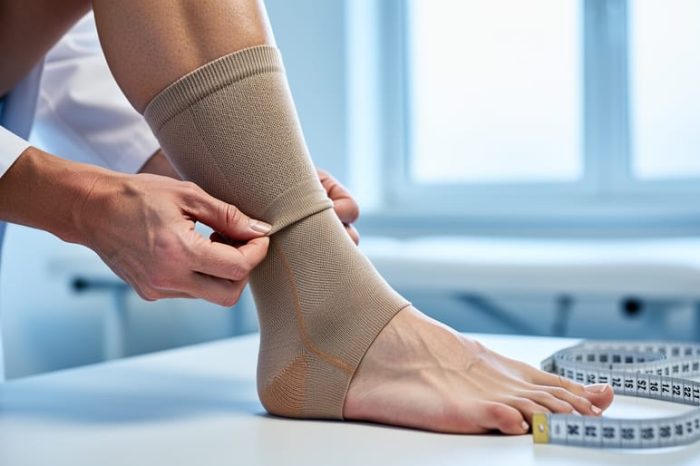
Compression socks are a medically proven treatment for deep vein thrombosis when prescribed and fitted correctly by a healthcare provider. These specialized garments apply graduated pressure to your legs, strongest at the ankle and gradually decreasing toward the knee or thigh, which helps prevent blood from pooling and reduces the risk of post-thrombotic syndrome following a DVT diagnosis. Most patients wear compression therapy for at least two years after their initial event, though your vascular specialist will determine the exact duration based on your individual risk factors and recovery progress.
If you’ve recently been diagnosed with DVT, you’re likely feeling overwhelmed by medical terminology and treatment options. Compression therapy stands as one of the most accessible yet clinically significant tools in your recovery plan. Unlike medications that work internally, compression socks provide external mechanical support that directly addresses the venous insufficiency DVT can cause.
The challenge many patients face isn’t whether to use compression therapy, but how to use it effectively. Choosing the wrong compression level, improper sizing, or inconsistent wear can significantly reduce the therapeutic benefit. This guide walks you through the complete process, from getting your initial prescription and measurements through daily wearing routines and long-term maintenance. You’ll learn exactly what compression level you need, how to ensure proper fit, when to wear your socks throughout the day, and how to recognize signs that adjustments are needed.
Understanding this treatment puts you in control of an important aspect of your DVT management and reduces your risk of future complications.
Understanding Compression Therapy for DVT
How Compression Supports DVT Recovery
When you wear compression socks during DVT treatment, they create graduated pressure that’s tightest at your ankle and gradually decreases up your leg. This external squeeze counteracts the pooling of blood that occurs when the clot blocks normal venous return. The pressure physically reduces the diameter of your surface veins, forcing blood to move through deeper vessels where circulation is more efficient. This helps oxygenated blood reach the affected area while simultaneously pushing deoxygenated blood back toward your heart against gravity.
The mechanical compression serves multiple therapeutic functions beyond just moving blood. It reduces swelling by limiting fluid leakage into surrounding tissues, which directly alleviates the heaviness and discomfort most DVT patients experience. The improved circulation supports your body’s natural clot-resolution processes by delivering more white blood cells and clot-dissolving factors to the site. Evidence shows that compression stockings prevent PTS ( post-thrombotic syndrome), the chronic pain and swelling that can develop after DVT if the valves in your veins are damaged.
Types of Compression Used in DVT Treatment
Compression socks for DVT treatment come in specific pressure ranges measured in millimeters of mercury (mmHg). Medical-grade compression typically falls into Class II (20-30 mmHg) or Class III (30-40 mmHg), with your doctor prescribing the appropriate level based on your DVT severity and location. Class I compression (15-20 mmHg) is generally too mild for active DVT treatment but may be used for long-term prevention.
Length matters significantly. Knee-high compression socks work well for DVT below the knee and offer easier application. Thigh-high stockings provide coverage for above-knee clots but can be challenging to keep in place without proper sizing. Your clot location determines which length your healthcare provider will recommend.
Prescription versus over-the-counter is not just about cost. Prescription compression socks ensure medical-grade quality, accurate pressure gradients, and proper sizing through professional measurement. They’re often covered by insurance when medically necessary for DVT treatment. Over-the-counter options lack this oversight and may not deliver therapeutic compression levels consistently. For DVT treatment specifically, always use compression socks prescribed and fitted by your healthcare team rather than self-selecting from retail options.
What You’ll Need Before Starting
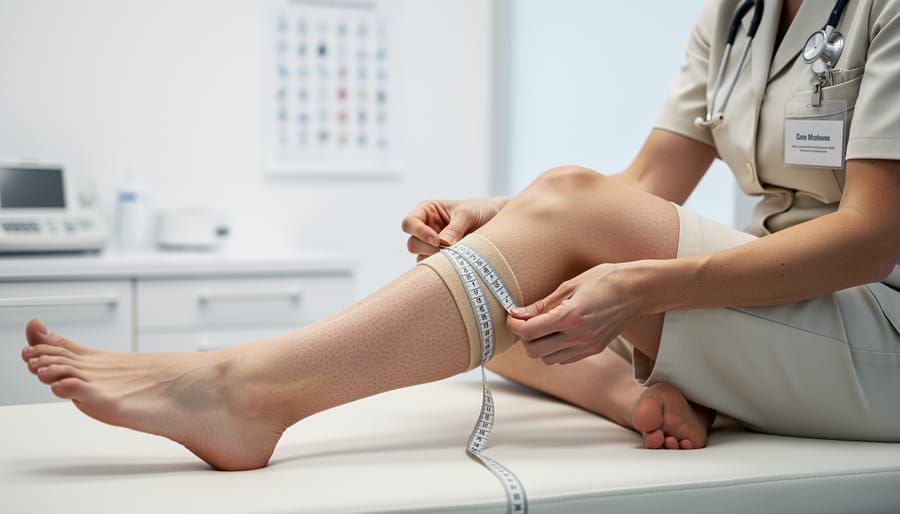
Getting the Right Prescription and Fit
Your healthcare provider must evaluate your specific DVT situation before prescribing compression therapy. They’ll assess the clot’s location, your overall health, and any conditions that might make compression unsafe. This isn’t a one-size-fits-all treatment, the wrong compression level or fit can be ineffective or even harmful.
Proper measurement requires precise leg dimensions taken at specific times. Your provider or medical fitter will measure your ankle circumference at its narrowest point, calf circumference at its widest, and the distance from your heel to just below the knee (for knee-high socks) or to your groin (for thigh-high stockings). These measurements must be taken in the morning before any swelling develops, ideally while you’re still in bed or shortly after rising.
Come to your appointment prepared with information about your symptoms, previous compression therapy experiences if any, and your daily activity level. Mention any skin conditions, allergies to fabrics, or mobility limitations that affect your ability to put on tight garments. Your provider needs this context to prescribe the appropriate compression class (typically 20-30 mmHg or 30-40 mmHg for DVT treatment) and style that you’ll actually be able to use consistently.
Important Safety Considerations and Warnings
When Compression Therapy May Not Be Safe
Certain medical conditions make compression therapy potentially dangerous. Patients with severe peripheral arterial disease (PAD) or arterial insufficiency should never use compression socks without vascular specialist approval, as restricting blood flow to already compromised arteries can cause tissue damage or limb-threatening ischemia.
Active skin infections, open wounds, dermatitis, or weeping skin conditions on the legs require treatment before applying compression. The socks can trap bacteria and worsen infection while preventing proper wound healing.
Severe congestive heart failure patients need careful evaluation before compression therapy. Increasing venous return to an already overloaded heart can trigger pulmonary edema or cardiac decompensation.
Patients with severe diabetic neuropathy face unique risks. Reduced sensation means they may not feel excessive pressure, bunching, or developing sores until significant damage occurs. These patients require shorter compression stockings and frequent skin checks.
Other situations requiring caution include extreme leg swelling where the skin appears taut and shiny, recent vein stripping surgery, and known allergies to stocking materials. Always disclose your complete medical history to your healthcare provider before starting compression therapy for DVT.
Signs That Something Is Wrong
Recognizing when compression therapy is causing harm rather than helping is critical for your safety. Remove your compression socks immediately and contact your healthcare provider if you notice any of these warning signs:
Circulation problems: Your toes turn white, blue, or purple; you feel numbness, tingling, or a “pins and needles” sensation that doesn’t resolve within minutes of removing the socks; or your foot feels cold to the touch compared to the other leg.
Increased DVT symptoms: Pain, swelling, or warmth in your calf or thigh gets worse rather than better; you develop new areas of tenderness; or you notice the affected leg becoming significantly larger despite wearing compression.
Skin breakdown: Blisters, open sores, or raw areas develop where the sock sits; you see signs of infection like redness spreading beyond the compression area, pus, or red streaks moving up your leg; or your skin becomes excessively dry, cracked, or macerated.
Severe discomfort: Sharp, shooting pain occurs when wearing the socks; compression causes unbearable pressure that doesn’t improve with adjustment; or you experience difficulty breathing or chest pain, which could indicate a pulmonary embolism requiring emergency care.
Don’t wait to see if symptoms improve. These signs demand immediate medical evaluation.
Step-by-Step: Putting On Your Compression Socks
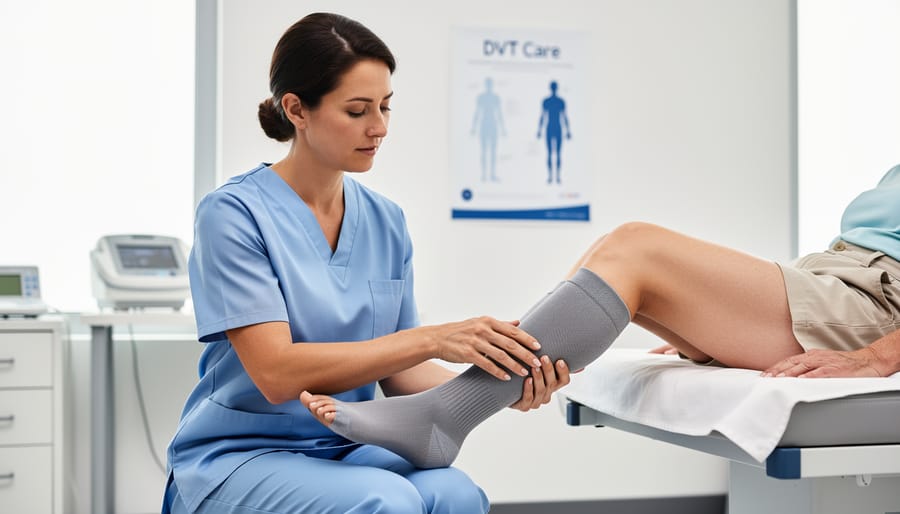
Preparing Your Legs
Before putting on compression socks, ensure your legs are completely dry. Any moisture, from showering, lotion, or sweat, makes the fabric stick and bunch, creating uneven pressure that reduces effectiveness. If you’ve just bathed, pat your legs thoroughly dry and wait five to ten minutes for complete drying.
Apply compression socks first thing in the morning, before swelling develops. Overnight, gravity isn’t working against venous return, so legs are naturally less swollen. If you must apply them later, elevate your legs for fifteen minutes first to reduce fluid accumulation.
Sit in a sturdy chair with good lighting. Remove rings that might snag the delicate fabric. Check your legs for cuts, blisters, or irritated areas, address these before donning socks to prevent infection or worsening. Clean, dry skin in a stable seated position sets you up for successful application.
The Donning Process
Turn your compression sock inside out down to the heel, leaving just the foot portion right-side out. This creates a pocket that makes application significantly easier than trying to pull the entire sock up your leg at once.
Slide your foot into the foot portion, ensuring your heel sits properly in the heel pocket of the sock. Your toes should reach the end without bunching. If the sock has an open-toe design, make sure your toes extend through the opening comfortably.
Now begin unrolling the sock up your leg in small sections, smoothing as you go. Work slowly and deliberately, rushing causes wrinkles and uneven compression. Use your palms rather than your fingernails to avoid snagging the fabric. Pull from the fabric itself, never the top band, which can stretch out and lose effectiveness.
Pay special attention to the ankle area, where most people struggle. Ensure the sock lies flat against your ankle bones without gaps or bunches. The fabric should feel snug but not painfully tight.
As you continue up the calf, smooth out any wrinkles by running your hands upward along the leg. The compression should feel firm and even throughout. The top band should sit two finger-widths below your knee bend (for knee-high socks) without rolling down.
Check that seams align properly and the fabric isn’t twisted. Any twisted sections create pressure points that cause discomfort and reduce therapeutic benefit.
Using Donning Aids and Tools
Many DVT patients struggle with the physical demands of putting on compression socks, especially those recovering from surgery, dealing with arthritis, or experiencing pain and swelling. Donning aids transform a frustrating task into a manageable routine.
A sock donner is the most popular assistive device. This flexible frame holds your sock open while you slide your foot in, then you pull handles to bring the sock up your leg. Models range from basic wire frames to cushioned versions with extended handles for those who can’t bend easily. Apply talcum powder or wear rubber gloves to reduce friction and make the process smoother.
For patients with severe grip weakness, butler sticks with hooks help pull socks into position without bending. Silk liners worn underneath compression socks reduce friction against skin and make sliding the sock up much easier, though check with your doctor first to ensure they won’t compromise compression effectiveness.
Daily Wear Guidelines for DVT Treatment

Duration and Frequency
During acute DVT treatment (typically the first 3-6 months after diagnosis), most physicians recommend wearing compression socks from morning until bedtime, roughly 12-16 hours daily. Put them on before getting out of bed when leg swelling is minimal, and remove them at night before sleeping unless your doctor specifically instructs otherwise.
Overnight wear is generally unnecessary for DVT treatment because lying flat naturally improves venous return. However, some patients with severe post-thrombotic syndrome or specific complications may receive different instructions from their healthcare provider.
As you transition to long-term prevention, your wearing schedule may change. Many patients continue daily wear indefinitely to prevent post-thrombotic syndrome, while others gradually reduce frequency based on symptom resolution and medical assessment. Your vascular specialist will adjust this timeline based on clot location, your response to treatment, and ongoing risk factors.
Consistency matters more than perfection. If you occasionally miss a day or need to remove your socks early due to discomfort, don’t panic, just resume your normal schedule the next day and mention any patterns of difficulty at your follow-up appointment.
Removing Your Compression Socks Safely
Taking off your compression socks requires as much care as putting them on. Never rush the removal process, especially after wearing them all day when your skin may be more sensitive.
Start by sitting down in a comfortable position with good lighting so you can see what you’re doing. Roll the sock down gradually rather than yanking it off in one motion. Begin at the top band and work your way down in small increments, turning the sock inside-out as you go. This controlled approach prevents the elastic from snapping against your skin or causing friction burns.
If the sock feels stuck or is difficult to remove, resist the urge to pull harder. Instead, use a small amount of talcum powder or cornstarch around the ankle and calf to reduce friction. Some patients find that gently wiggling their toes and flexing their ankle while rolling down the sock makes removal easier.
Once removed, inspect your legs carefully. Look for any areas of redness that don’t fade within a few minutes, marks from the sock band, blisters, or skin breakdown. Slight indentation from the elastic is normal, but deep grooves, persistent red marks, or skin damage signals that your socks may not fit properly.
Care and Maintenance of Your Compression Socks
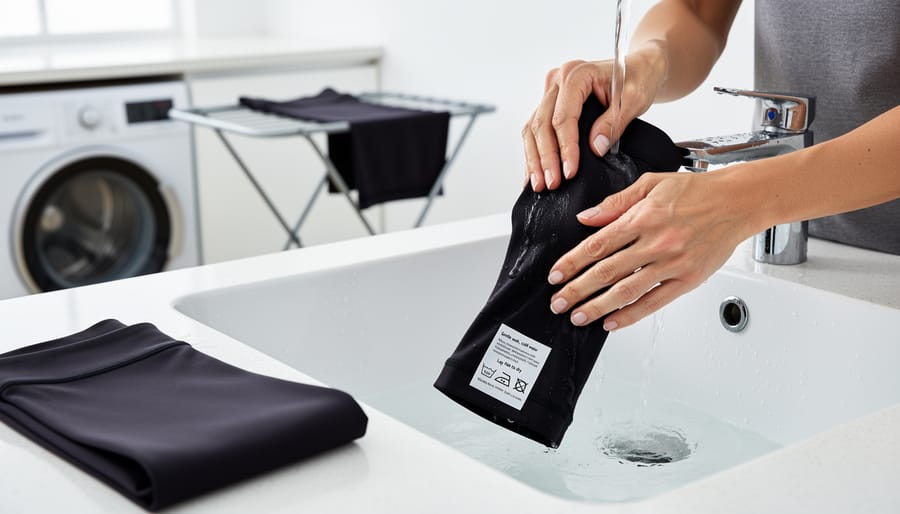
Proper care extends the life and effectiveness of your compression socks while ensuring they continue providing the therapeutic pressure your DVT treatment requires. Medical-grade compression fabric loses elasticity when exposed to harsh washing conditions or heat, potentially reducing the graduated compression that supports your recovery.
Wash your compression socks daily to remove oils, dead skin cells, and perspiration that break down elastic fibers. The best approach balances thorough cleaning with fabric preservation:
- Hand wash in lukewarm water with mild, fragrance-free detergent, or use a gentle machine cycle inside a mesh lingerie bag
- Skip fabric softeners, bleach, and harsh detergents that coat or damage compression fibers
- Air dry only by laying flat or hanging, never use a dryer, radiator, or direct sunlight
- Rinse thoroughly to remove all detergent residue that can irritate skin or stiffen fabric
- Inspect weekly for signs of wear including stretched bands, thinning fabric, holes, or loss of elasticity
- Replace every three to six months with regular use, or sooner if compression feels diminished
Having two pairs lets you rotate them while one dries, ensuring you never miss a day of treatment. Store clean, dry compression socks laid flat in a drawer rather than rolled tightly, which can stress elastic fibers. If you notice the socks slip down your leg during wear, no longer leave band marks on your skin, or feel noticeably looser than when new, they’ve likely lost therapeutic compression and need replacement. Your healthcare provider can verify whether your current socks still provide adequate pressure during follow-up appointments.
How to Know Your Compression Therapy Is Working
Checking for Proper Fit and Function
After putting on your compression socks, verify they’re working properly rather than causing harm. The band at the top should sit flat against your skin without rolling down or digging in deeply enough to leave pronounced indentations. If you see a tourniquet-like band or your skin bulges around the edges, the size is likely wrong.
Check that the heel sits in the correct position and hasn’t rotated to the side or bunched up. The sock should lie smooth against your leg without wrinkles, bunching, or loose areas that indicate improper compression distribution. Run your hand along the fabric, you shouldn’t find any twisted sections or compressed bands except at the graduated compression points.
Your leg should feel firm, supportive pressure that’s strongest at the ankle and gradually decreases upward. This isn’t comfortable in the traditional sense, but it shouldn’t hurt. Warning signs include sharp pain, tingling, numbness, or skin that turns white, blue, or mottled. Your toes should remain pink and warm to touch.
If you can’t slip one finger comfortably under the top band, or if you experience any concerning symptoms, remove the socks and contact your healthcare provider before wearing them again.
Next Steps and Ongoing Management
Follow-Up Care and Monitoring
Your healthcare provider will typically schedule follow-up appointments at specific intervals to monitor your DVT recovery and compression therapy effectiveness. Most patients need an initial check-in within two to four weeks after starting treatment, then follow-ups every three to six months during the first year.
During these appointments, your doctor will assess leg swelling, skin condition, and overall symptom improvement. They’ll use ultrasound imaging to confirm the clot has stabilized or resolved, and they’ll evaluate whether your current compression level remains appropriate. As swelling decreases and your condition stabilizes, you may transition to lower compression grades or adjust wearing schedules.
Keep a simple log noting daily swelling patterns, discomfort levels, and any skin changes. Bring this to appointments, it helps your healthcare team make informed adjustments. Many patients eventually shift from therapeutic-grade compression (30-40 mmHg) to moderate support stockings (20-30 mmHg) for long-term prevention once acute DVT has resolved.
Report new symptoms immediately rather than waiting for scheduled visits. Increased pain, sudden swelling changes, or breathing difficulties warrant urgent evaluation. Your compression needs will evolve as you heal, so expect periodic reassessments of sock fit and prescription strength.
Integrating Compression with Other DVT Treatments
Compression socks rarely work alone in DVT treatment, they’re one part of a coordinated approach your healthcare team designs specifically for you. Anticoagulation medication remains the cornerstone of DVT treatment, preventing clot growth and reducing recurrence risk, while compression addresses the mechanical aspects of venous return and symptom relief. These therapies complement rather than replace each other.
Your doctor will also likely recommend graduated mobilization and specific exercises once the acute phase passes. Compression socks actually make movement safer and more comfortable by stabilizing the affected limb and reducing swelling during activity. Similarly, lifestyle modifications like hydration, avoiding prolonged immobility, and leg elevation work synergistically with compression therapy to optimize blood flow.
Think of your treatment plan as interconnected: medication prevents clot progression, compression manages symptoms and supports healing, and movement prevents complications. Skipping any component can compromise your recovery, so follow your healthcare provider’s complete treatment protocol rather than focusing on compression alone.
Common Questions About Compression Socks for DVT
Patients using compression socks for DVT treatment often have similar concerns. The following questions address the most common practical and medical uncertainties that arise during treatment.
Can I exercise while wearing compression socks?
Yes, most patients can and should exercise while wearing their compression socks. Walking and gentle movement actually enhance the effectiveness of compression therapy by promoting venous return, though you should confirm specific activity guidelines with your healthcare provider based on your DVT severity and location.
How tight should compression socks feel?
Properly fitted compression socks should feel snug and supportive without causing pain, numbness, or visible skin indentations beyond the normal band marks. You should feel firm, graduated pressure that is strongest at the ankle and gradually decreases up the leg.
What should I do if my compression socks keep rolling down?
Rolling typically indicates incorrect sizing or a sock that has lost elasticity. Try reapplying them carefully to ensure proper positioning, and if rolling persists, contact your provider for a fit reassessment or replacement, as rolled compression socks can create dangerous tourniquet effects.
Can I fly with DVT while wearing compression socks?
Air travel decisions with active or recent DVT must be made by your healthcare provider based on clot stability, anticoagulation status, and timing. If cleared to fly, compression socks are typically required, along with additional precautions like frequent movement and adequate hydration.
Will I need to wear compression socks forever?
Duration varies by individual case. Some patients wear compression socks only during acute treatment and recovery (weeks to months), while others with post-thrombotic syndrome or recurrent clot risk may need long-term use, which your vascular specialist will determine based on follow-up assessments.
Beyond these common questions, you may have concerns specific to your situation, your skin sensitivity, or how compression fits with your work schedule. Write these down and bring them to your next medical appointment. Your healthcare team expects questions and can adjust your compression protocol to address practical challenges while maintaining therapeutic benefit. Many patients also find peer support groups helpful for learning real-world tips from others managing DVT with compression therapy.
Using compression socks correctly is a scientifically validated part of DVT treatment that puts you in an active partnership with your healthcare team. When you follow your prescribed compression regimen, maintain proper fit, and wear your socks as directed, you’re taking concrete steps to support your recovery and reduce your risk of long-term complications.
Your success depends on consistency and communication. Wear your compression socks according to your treatment plan, but never hesitate to contact your doctor if you experience concerning symptoms, fit problems, or questions about your therapy. What seems like a small issue with your compression wear can signal something that needs adjustment or medical attention.
Recovery from DVT isn’t passive, it requires your daily participation through proper compression use, medication adherence, and lifestyle modifications. You’ve learned the techniques to put on your socks correctly, recognize warning signs, and maintain your compression garments effectively. These aren’t just tasks to check off; they’re your tools for protecting your vascular health.
Trust the process, trust your medical team, and trust yourself to follow through. With proper compression therapy and ongoing medical supervision, you’re giving yourself the best chance for complete recovery.